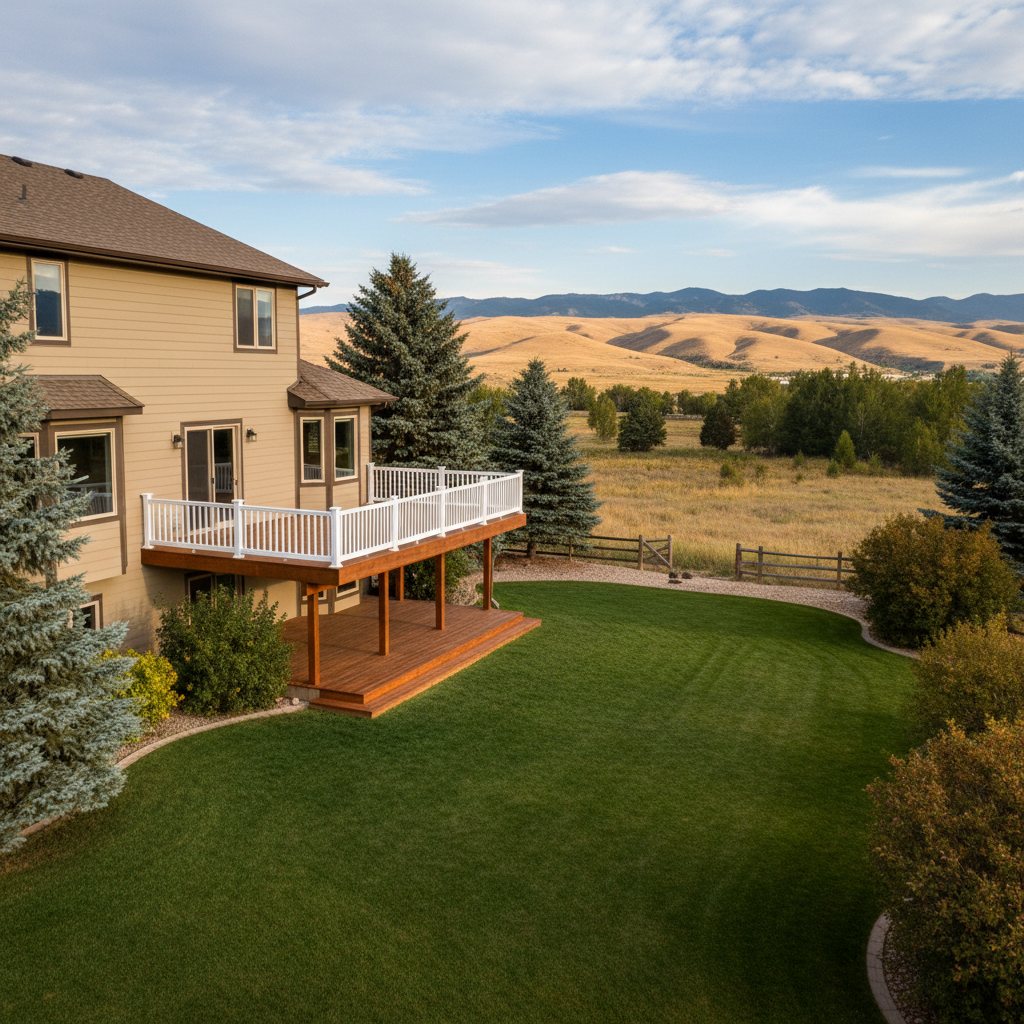
So, you're looking at your deck and thinking it's time for a facelift, huh? Maybe it's faded, maybe it's looking a bit tired, or perhaps you just want a new color. Whatever the reason, deciding whether to stain or paint your deck here in Billings isn't a decision you should take lightly. It's not just about how it looks; it's about protecting your investment from our crazy Montana weather.
Stain or Paint? That's the First Question.
This is where most folks start, and it's a good place. But there's a lot more to it than just what looks good. Each option has its own pros and cons, especially when you consider our hot summers and brutal, snowy winters.
- Deck Stains: Stains soak right into the wood, rather than sitting on top like paint. This means they let the natural grain of the wood show through, which a lot of people, myself included, really appreciate. Stains come in different opacities: clear, semi-transparent, semi-solid, and solid. The more opaque the stain, the more color it adds and the more protection it offers against UV rays. The downside? Stains generally need reapplication more often than paint, usually every 2-5 years depending on the product and how much sun your deck gets. They also don't hide imperfections as well as paint does.
- Deck Paints: Paint sits on the surface of the wood, forming a protective layer. It's great for covering up old, tired wood, or if you want a complete color change. Paint offers excellent protection against moisture and UV, and it can last longer than stain – sometimes 5-10 years before needing a refresh. But here's the catch for us in Billings: paint can chip, peel, and crack, especially with our freeze-thaw cycles. Once it starts peeling, it's a real bear to fix, often requiring a full strip. You also lose that natural wood look, which can be a bummer.
For most of the decks I work on, especially those beautiful cedar or redwood decks in neighborhoods like the Heights or around Alkali Creek, I usually lean towards a good quality solid or semi-solid stain. It gives you great protection, good color, and still lets the wood breathe a bit. Plus, when it's time to re-do it, it's generally an easier process than stripping old paint.
Prepping Your Deck: Don't Skip This!
I can't stress this enough: the prep work is probably 80% of the job. If you don't prep right, even the most expensive stain or paint won't last. I've seen it time and time again – folks try to cut corners, and their finish is peeling or fading within a year.
- Clean it thoroughly: You need to get rid of all the dirt, grime, mildew, and old, loose finish. A good deck cleaner and a power washer (used carefully!) are your best friends here. Let it dry completely – and I mean completely – for at least 48 hours, maybe more if it's humid.
- Sand it down: For the best adhesion, a light sanding can make a huge difference, especially if you're going from a worn finish or dealing with raised grain. It opens up the wood pores so the stain can really soak in.
- Repair any damage: Replace rotten boards, tighten loose screws, fill cracks. You want a solid surface before you put anything on it.
This isn't glamorous work, but it's crucial. Think of it like painting a car; you wouldn't just spray new paint over rust, would you?
Picking the Right Product for Billings Weather
Our climate here in Billings is no joke. We get intense sun exposure, especially in the summer, which can fade finishes fast. Then there's the snow, ice, and those wild temperature swings that cause wood to expand and contract. You need a product that can stand up to all of that.
I always recommend using high-quality, exterior-grade stains or paints specifically designed for decks. Don't cheap out here. Look for products with good UV inhibitors and mildew resistance. Oil-based stains tend to penetrate deeper and offer excellent protection, but water-based options have come a long way and are often easier to clean up and dry faster. For a lot of the older homes in the South Side or even some of the newer builds out west, folks want something that's going to last and look good, and that means investing in quality products.
Why Local Expertise Matters
You might think, 'A deck is a deck, right?' Not really, not when you factor in local conditions. The soil composition here, the specific types of wood used in homes built across different decades, our particular weather patterns – it all plays a role. A contractor from Billings knows what products perform best on a deck that's going to see 100-degree summer days and -20-degree winter nights. We know which areas get more sun, which ones are prone to mildew because of shade, and how to properly prepare a deck that's been through a few tough Montana seasons.
When you hire a local company like Billings Deck Creations, you're not just getting someone to slap on some paint. You're getting someone who understands the unique challenges of building and maintaining decks right here in our community. We've seen what works and, more importantly, what doesn't. We're here, we're part of the community, and we stand by our work because our reputation depends on it.
So, before you grab a bucket of whatever's on sale, give it some thought. A little planning and the right approach will ensure your deck looks great and stays protected for years to come.